Control starts with identity
Tool control is broader than counting items at the end of a shift. A useful system links each controlled tool or defined kit to an identity, a custodian or location, and a status that can be understood by the people relying on it. The purpose is both physical accountability and confidence that the equipment is available for its intended use.
A manufacturer’s model number describes a type of product. A serial number or organizational asset identifier distinguishes an individual item. Those are different functions. Two apparently identical instruments may have different calibration histories, restrictions or damage reports. A record that identifies only the model can therefore leave the most important question unanswered: which instrument was actually involved?
Visual organization is one layer
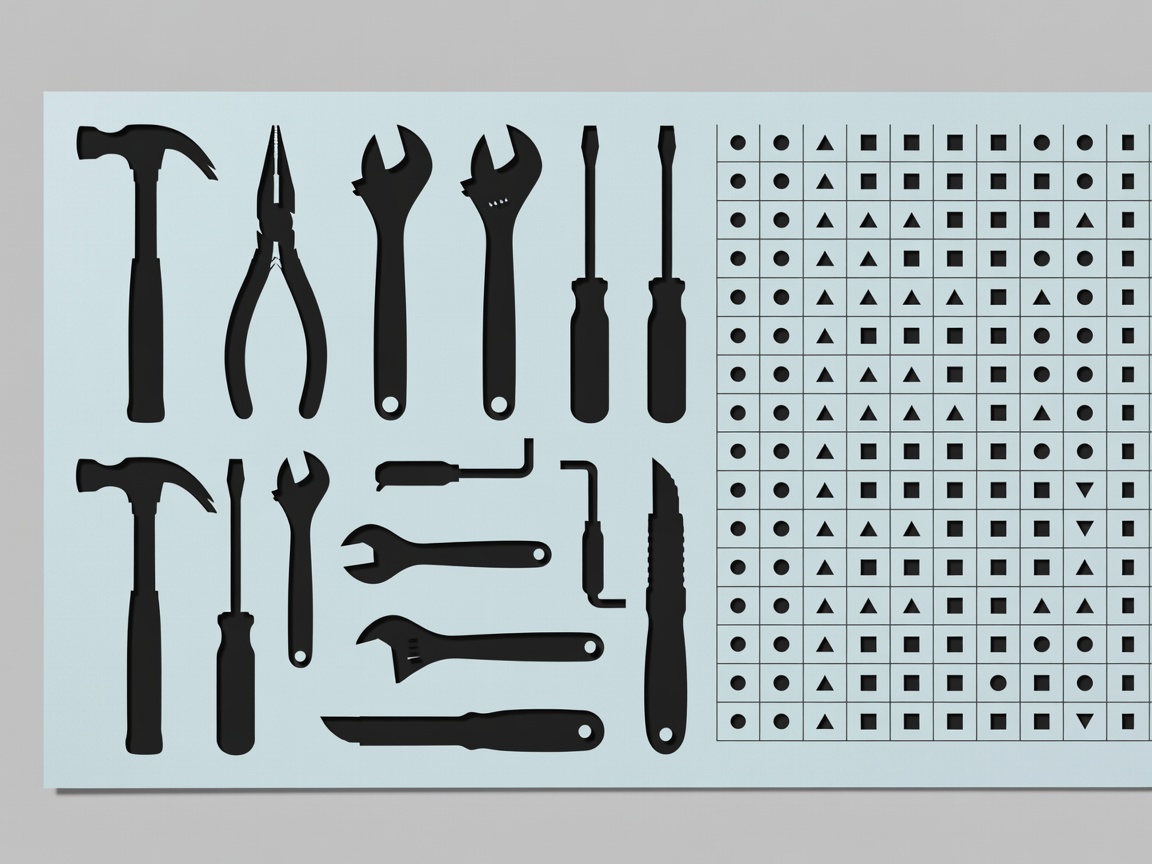
Shadow boards, fitted cases and drawer outlines can make an absent item conspicuous. They are valuable visual aids, but they do not explain why the space is empty. An item might be issued, transferred, undergoing calibration, quarantined or unaccounted for. The associated register needs to distinguish those states rather than treating every absence as equivalent.
Electronic cabinets, barcode labels and radio-frequency identification can improve the speed of transactions. They do not eliminate the need for clear ownership of the process. A system can record that a tag passed a reader without proving that the complete tool, every accessory or the correct kit contents were reconciled. Technology changes how evidence is collected, not what the organization must establish.
Small detachable items deserve attention within the organization’s defined system. A principal tool may be present while an associated component is not. The appropriate level of accountability depends on the equipment and applicable procedures; this guide does not prescribe a universal kit arrangement or missing-tool search method.
Capability
Connect an identified tool to custody, location, status and supporting records.
Limitation
Cannot guarantee physical completeness or measurement suitability merely because a database field says “available.”
Calibration is not adjustment
Calibration establishes a relationship between reference values and indications under specified conditions, including associated measurement uncertainties. Adjustment changes a measuring system so that it provides prescribed indications. Verification provides objective evidence that specified requirements are fulfilled. These activities may occur within one service visit, but they are not synonyms.
That distinction matters when reviewing a certificate. Reported results before adjustment can help an organization evaluate the instrument’s prior performance. Results after adjustment describe a different state. If only a final conformity statement is available, the record may provide less evidence about how the instrument behaved before service. What information is required should be established through the organization’s equipment-control arrangements.
| Term | Meaning in context |
|---|---|
| Calibration | Relates indications to reference values under stated conditions. |
| Adjustment | Changes the measuring system’s response. |
| Verification | Provides evidence that specified requirements are fulfilled. |
| Traceability | Connects a result to a reference through a documented calibration chain. |
| Uncertainty | Characterizes dispersion associated with a measurement result. |
| Quarantine | An organizational control state preventing unintended use pending disposition. |
Traceability requires more than a label
A calibration label is a concise status aid. It cannot contain the complete evidence for measurement traceability. The underlying record needs to connect the instrument to calibration results, relevant reference standards, uncertainty and the conditions or limitations of the work. The organization also needs confidence that the service provider’s capability covers the required measurement.
ISO/IEC 17025 provides requirements for the competence of testing and calibration laboratories. Accreditation bodies such as UKAS publish accredited scopes that allow readers to examine what a laboratory is assessed to perform. ILAC publishes policy and guidance on topics including metrological traceability. These resources explain the framework; they do not relieve a customer of checking the actual scope and certificate.
Not every item in a toolbox is a measuring instrument, and not every controlled item needs the same calibration treatment. Some equipment may require inspection, functional assessment or another form of control instead. The classification should follow applicable requirements and the item’s intended role, not a blanket assumption that one sticker format suits everything.
Intervals and exceptions need a reason
There is no single calibration interval that applies to every aviation tool. Applicable requirements, manufacturer information, usage, environment, performance history and the consequences of an incorrect result can all be relevant. A fixed calendar date may be part of a program, but it is not a complete explanation of that program.
Equipment found outside requirements can also create a retrospective evidence question. The organization may need to assess whether earlier results or work were affected. That assessment belongs to authorized personnel using the relevant records and procedures. Simply recalibrating the tool does not resolve every possible consequence of its earlier condition.
EASA’s continuing-airworthiness material and the FAA’s maintenance regulatory framework provide context for controlled maintenance systems. The exact requirements depend on jurisdiction, approval and activity. SAE International’s AS9146 provides a further reference on foreign object damage prevention programs, a related but broader subject than an individual tool inventory.
For a student or researcher, the key insight is that accountability is a chain of evidence. Identity makes records attributable; custody makes location explainable; calibration and other controls make status interpretable. A missing link cannot be repaired by a polished cabinet or a confident label.