What the tool is controlling
Torque describes the turning effect of a force about an axis. In maintenance discussions, it is often associated with tightening a threaded joint, but torque and clamp force are not interchangeable quantities. A torque tool provides an indication, signal or limiting action associated with rotational moment. It does not directly observe every condition inside the joint.
The relationship between applied torque and resulting clamp force depends on factors such as friction and the joint’s physical configuration. This is why a value separated from its governing maintenance data is incomplete. The required tool, units, conditions, sequence and acceptance criteria belong to the authorized task documentation. This guide explains tool categories without providing any tightening procedure or aircraft-specific value.
Indicating and setting tools
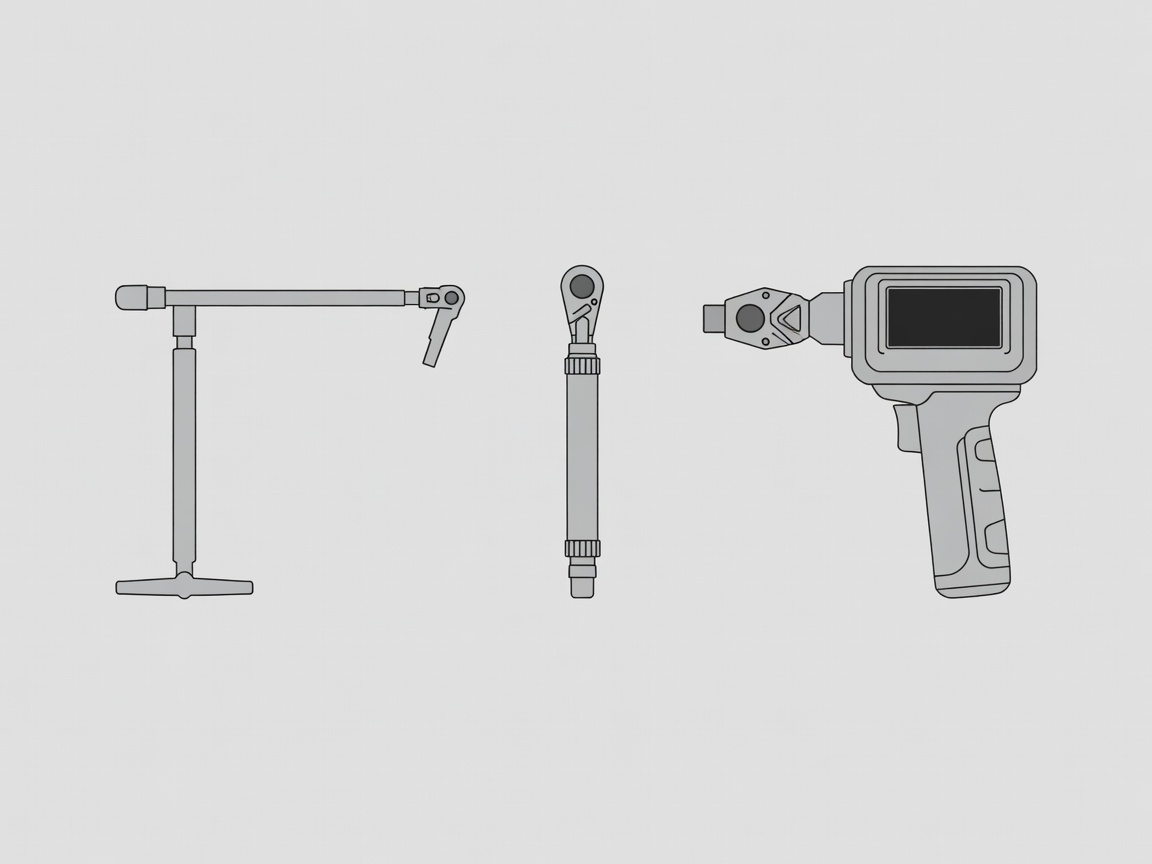
An indicating torque tool presents a value associated with the applied torque. Familiar examples include beam, dial and electronic designs. Their displays differ, but each has a supported range, operating conditions and stated measurement performance. A large display or a fine digital increment does not by itself demonstrate better suitability for a particular task.
A setting torque tool is associated with a selected value and a signal or mechanical response when that value is reached under its intended conditions. A click-type wrench is a familiar example. The signal is part of the tool’s designed behavior, not independent proof that the joint now satisfies every requirement. Tool condition and the applicable method remain relevant.
Some torque screwdrivers and other designs use different release or limiting mechanisms. Their behavior should not be inferred from the appearance of another tool family. Manufacturers such as Norbar, STAHLWILLE, GEDORE and Snap-on publish distinct product ranges and technical information. Those documents are useful for identifying architectures, but a brand name does not create universal interchangeability.
Capability
Indicate or control torque within a documented range, direction and set of operating conditions.
Limitation
Cannot directly establish clamp force, correct joint condition or compliance with an unspecified installation requirement.
Electronic features need separate questions
Electronic tools may include peak displays, configurable alerts, angle measurement or stored readings. These are separate capabilities. An electronic display does not automatically mean that the tool can export records, associate a reading with a specific task or protect the integrity of the resulting data. Even when data logging exists, its usefulness depends on identification and context.
A saved reading without a tool identifier, applicable task reference, units or meaningful association with the work may be difficult to interpret later. Equally, an exported file is not automatically a controlled maintenance record. The organization’s documentation system determines what constitutes a valid record and how it is retained, reviewed and linked to authorized activity.
Specifications are conditional statements
When researching a torque tool, distinguish its nominal range from the range over which a stated performance specification applies. Direction of operation can matter. So can the relationship between a detachable head, the parent instrument and the manufacturer’s documented configuration. Accessories may change the measurement arrangement; they must not be treated as neutral additions solely because they fit mechanically.
Units deserve explicit attention in any comparison. A value in newton metres is not the same notation as a value in pound-force inches or pound-force feet. This register intentionally provides no conversion calculator or adapter correction formula. Such tools can create a false impression that the only remaining question is arithmetic, when the controlling documentation and permitted arrangement must come first.
| Specification field | Research question |
|---|---|
| Tool type | Does it indicate a value, signal a setting or limit action? |
| Supported range | Where does the stated performance apply? |
| Direction | Which direction or directions are covered? |
| Configuration | Which head and accessory arrangement is documented? |
| Recording | What information is stored, identified and exportable? |
| Calibration | What results, uncertainty and scope are reported? |
What a torque calibration establishes
ISO 6789 distinguishes requirements for hand torque tools across its parts, including design-conformance matters and calibration with measurement uncertainty. The applicable part and edition should be identified rather than citing “ISO certified” as a complete specification. ASME B107.300 is another relevant torque-instrument reference. A standards reference must be read for its scope; it does not confer aircraft-specific approval.
Calibration relates the tool’s behavior to reference measurements under stated conditions. It does not establish that the tool has remained undamaged since the calibration date or that its use on a particular joint was appropriate. A certificate also needs to correspond to the tool’s actual identity. Serial numbers and documented configuration are more useful than a generic certificate image in a sales listing.
Performance history, intensity of use, environmental exposure and applicable requirements can influence a calibration program. A dropped, overloaded or otherwise suspect tool raises a status question that should follow the organization’s controlled process. This is not an invitation to diagnose or adjust it from general web advice.
The sound research conclusion is usually a bounded one: this tool family can provide this kind of torque evidence within these documented limits. Deciding that it is authorized and suitable for a maintenance task remains a separate responsibility.